The Garden of Eden of East Africa.
The Ngorongoro crater is located west of Arusha, connecting the Serengeti in the north-west to the Great Rift Valley in the east. The park was established as a conservation area for wildlife and the semi-nomadic Maasai population that reside in it.
The caldera (Volcanic crater) is an important landmark for human history, as well as an essential habitat safeguarding animal diversity. Despite its small area, the caldera has excellent bio-diversity, and several globally threatened species live on these plains.
Another amazing site is the Olduvai Gorge, a 14km long ravine. The crater was formed around 2.5 million years ago when a volcano, thought to be roughly the same height as Kilimanjaro, erupted and collapsed in on itself. Now dormant, the volcano's crater is 610 metres deep and 20km wide, making it the world's largest inactive caldera.
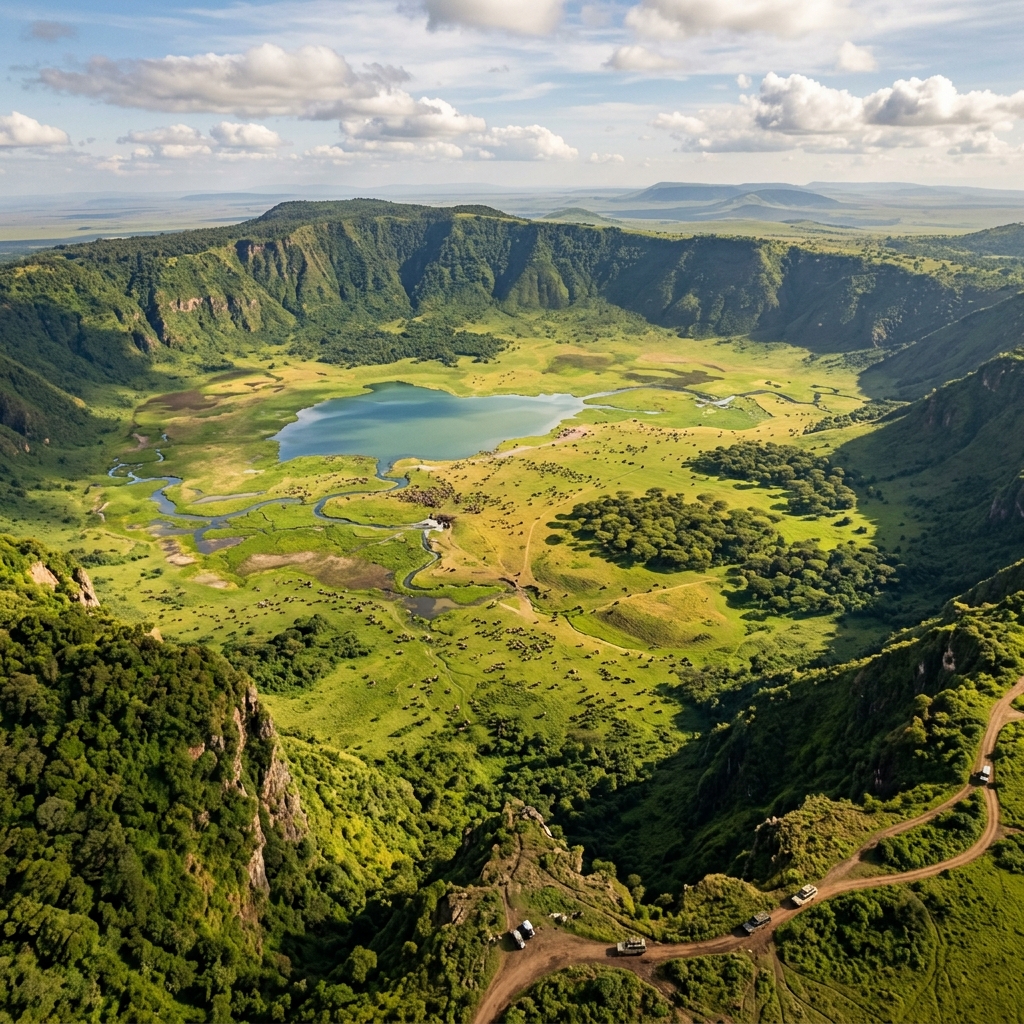
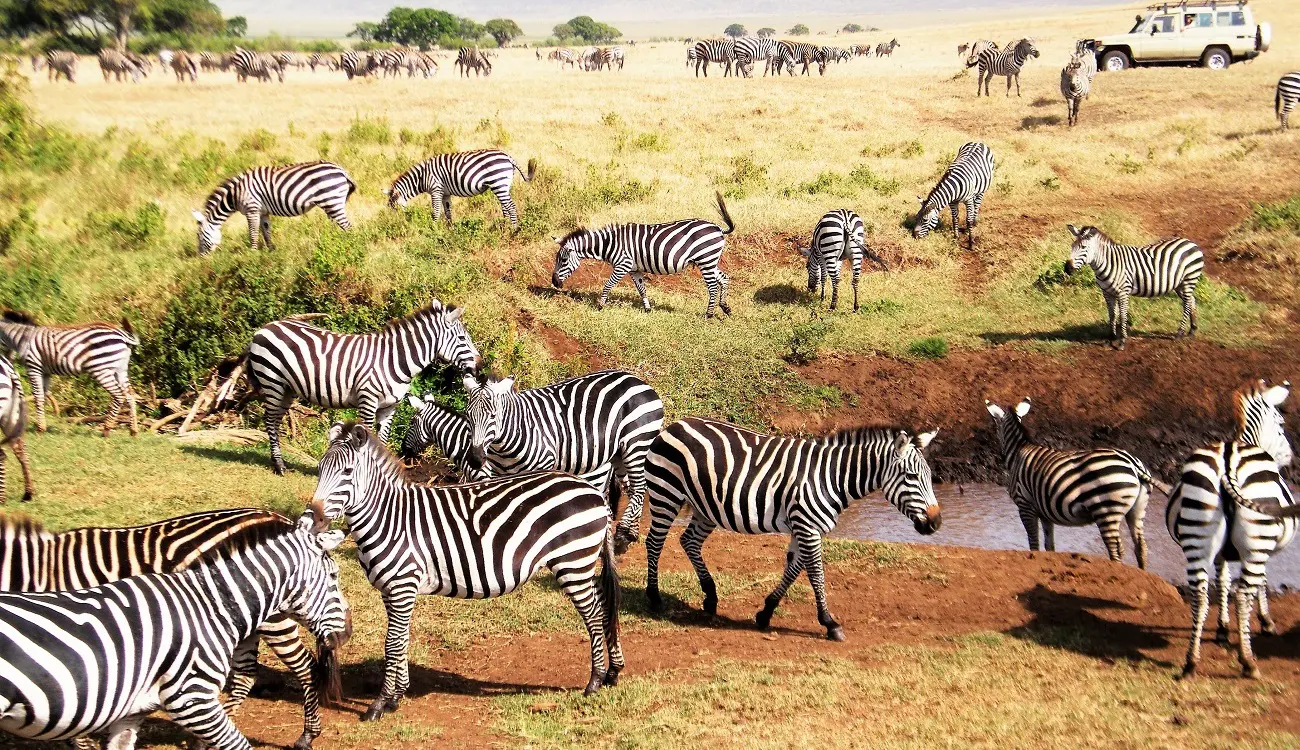
The crater basin is covered with fresh water and alkaline lakes, marshes and swamps. These alkaline lakes attract flamingos, which number in their thousands during the wet season. The crater is home to some 30,000 animals.
The rich, volcanic, fertile soil of the crater hosts plenty of wildlife in the dry season, including warthog, impala, and buffalo. These prey in turn attract predators, including lions, hyena, cheetah, leopard, wild hunting dog and golden cat. A high population of cheetahs and lions can be found in the Lake Ndutu region.
The crater is also home to over 500 species of bird. The rarest animals found here are the black male lion and the black rhino. Interestingly, there are no giraffes in the crater; it is thought that they cannot get up the steep sides.
The best time to visit is from June to February if you are coming for the Great Migration. Wildlife lives at the crater year-round, which means you can visit at any time of year and still get great game viewing.
If you are keener on seeing predators in action, go in January or February when the wildebeest calve. Peak season is July to September.